
Shipping frozen embryos: What you need to know
Need to move frozen embryos from one fertility clinic to another? Here’s how the paperwork, cryogenic transport and clinic-to-clinic journey work.
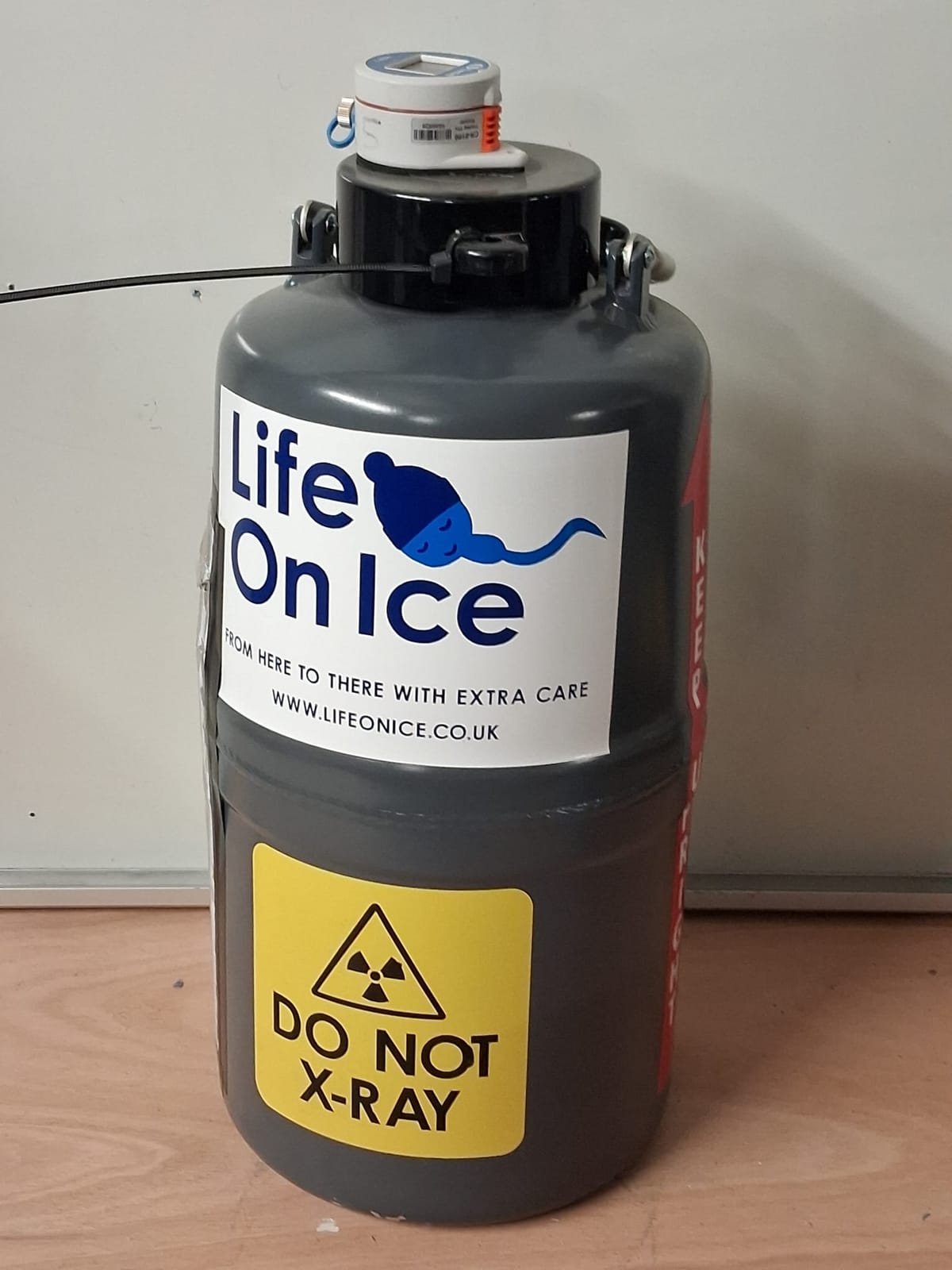
If you need to move frozen embryos from one fertility clinic to another, you may be wondering how on earth you would actually go about it.
The good news is that shipping frozen embryos between fertility clinics is perfectly possible, both within the UK and internationally. But these are precious, often completely irreplaceable samples, so this is not something you want treated like an ordinary package.
There are two parts to moving frozen embryos between clinics. Firstly, the clinics need to sort out the paperwork and agree that the embryos can be released and accepted. Once that is all in place, the second part is the physical journey itself, getting those embryos safely from one clinic to the other while keeping them properly cryopreserved throughout. That second bit is where we come in.
Start with your fertility clinics
Before booking embryo transport, speak to both clinics.
Your current clinic needs to agree to release the embryos, and the new clinic needs to confirm that it can accept them. There will usually be consent forms and information that needs to pass between the two.
If you are shipping frozen embryos internationally, there may also be import or export requirements to deal with.
This part can take considerably longer than the journey itself, particularly if the two clinics haven't worked together before. So, if your embryos are needed for a planned treatment cycle, start the conversation early.
How are frozen embryos transported?
Frozen embryos are kept at extremely low temperatures. During transport they must remain safely cryopreserved.
They are usually transported in something called a dry shipper.
Despite the slightly misleading name, a dry shipper has been charged with liquid nitrogen. The nitrogen is absorbed into the material inside the vessel, rather than sloshing around as free liquid.
When it has been properly prepared, a dry shipper can keep the contents at cryogenic temperature for the journey.
And no, the embryos are not thawed for transport and frozen again at the other end. They remain frozen throughout.
Why does the shipper matter?
Because the important question isn't simply:
“Will the courier get there?”
It is:
“Will my embryos remain under the correct conditions until they get there?”
A dry shipper needs to be suitable for the journey it is being used for and capable of maintaining cryogenic conditions for long enough to allow for the planned journey and reasonable delays.
At Life on Ice, we validate our dry shippers and monitor temperature during transport.
We also take chain of custody very seriously. We know exactly when responsibility for the samples passes from the sending clinic to us, and from us to the receiving clinic.
That matters when the contents of the shipper may represent years of fertility treatment.
What actually happens on collection day?
Once the clinics are ready, we arrange collection directly with the clinic storing the embryos.
The embryology or laboratory team identifies the correct samples and follows its own witnessing and release procedures before placing them into the transport vessel.
Our courier then takes responsibility for the shipper and transports it to the receiving clinic.
At the other end, it is handed directly to the appropriate clinic staff.
For most of our journeys, the same courier remains with the shipper from collection to delivery.
We don't consolidate several patients' embryos into one shipment. One patient, one consignment.
Can you transport frozen embryos internationally?
Yes.
Life on Ice transports frozen embryos both within the UK and internationally.
International embryo transport does involve a few more moving parts. The clinics need to establish that the embryos can legally be exported and imported, and requirements vary depending on the countries involved.
There may also be airline or airport procedures to deal with.
That is another reason for using a courier who understands fertility transport rather than simply booking a general international delivery service.
The journey itself might take a day. Getting everything ready for that journey can take rather longer.
How far ahead should I arrange embryo transport?
As soon as you know you are likely to need it.
You don't necessarily need a firm collection date at that point. But getting the two clinics talking to each other early is sensible.
If you have an embryo transfer cycle planned, tell both clinics the expected treatment dates. They can then work backwards and make sure the embryos arrive in plenty of time.
Moving embryos is not something I would want to leave until the week before treatment.
Choosing an embryo transport company
There are some fairly obvious questions I would ask before trusting anyone with frozen embryos.
How are the embryos being transported?
Is the dry shipper validated?
Is temperature monitored?
How is chain of custody recorded?
What happens if a flight is cancelled or there is another delay?
And who actually has custody of the shipper during the journey?
Price matters, of course. But when the contents may be impossible to replace, it shouldn't be the only question.
Need to move your frozen embryos?
If you need frozen embryo transport between fertility clinics, whether that is within the UK or internationally, get in touch with Life on Ice.
You don't need to have everything organised before contacting us.
Tell us:
- where your embryos are currently stored
- which clinic they need to go to
- roughly when you need them there.
We can explain the transport side, tell you what we need from you and work with the clinics to arrange the journey once they are ready.
Your embryos may travel thousands of miles. Our job is to make that journey as uneventful as possible.
This article gives general information about transporting frozen embryos. Individual fertility clinics and countries may have their own consent, regulatory and documentation requirements.