
International IVF Sample Transport: Moving Eggs, Sperm and Embryos Between Countries
Moving frozen eggs, sperm or embryos internationally? Find out how international IVF sample transport works, including clinic paperwork, cryogenic transport and chain of custody.
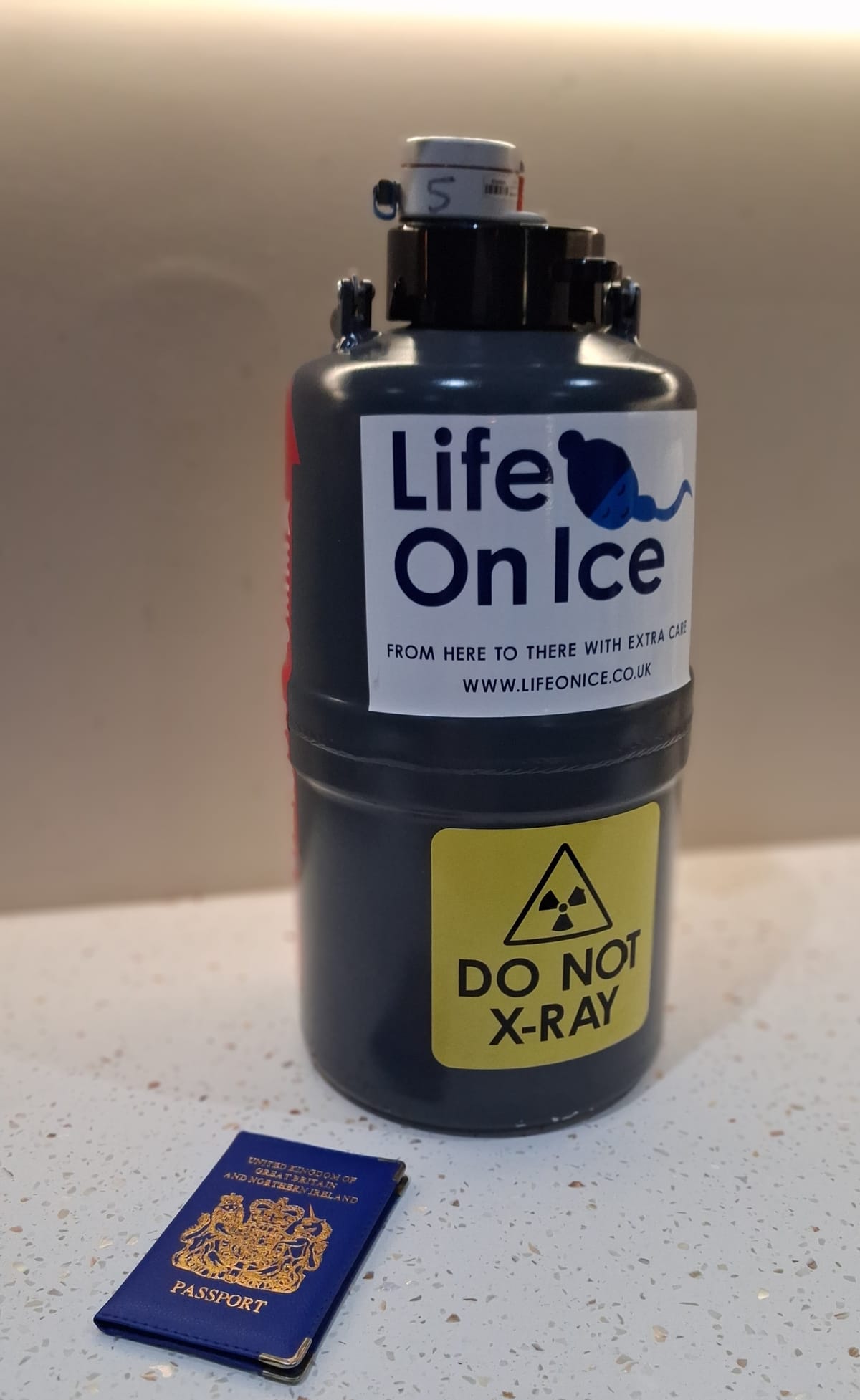
There are lots of reasons why someone might need to move frozen eggs, sperm or embryos from one country to another.
You might be moving abroad, changing fertility clinic, having treatment overseas, or planning to use samples that are already stored in another country.
Whatever the reason, the process has two quite separate parts.
First, the clinics need to sort out the clinical, legal and regulatory side and agree that the samples can be released and accepted.
Then somebody needs to get them safely from one clinic to the other.
That second part is what we do.
Start with the fertility clinics
If you are planning an international transfer, contact both clinics as early as possible.
The clinic currently storing your eggs, sperm or embryos needs to agree to release them. The receiving clinic also needs to confirm that it is able to accept them.
For transfers into or out of the UK, there are regulatory requirements as well. The HFEA confirms that eggs, sperm and embryos can be moved into and out of Great Britain and Northern Ireland, provided the relevant conditions are met. Not every fertility clinic offers an import and export service. HFEA
So this is definitely one of those occasions when it is better to get the clinics talking before you start booking flights or arranging transport.
What paperwork will I need?
There is no single answer to this because it depends on what is being moved, where it is coming from, where it is going, and the requirements of the clinics involved.
There may be consent forms, laboratory records, identification details and information about the origin and storage of the samples.
There may also be import or export requirements.
Your fertility clinic is the right place to advise you on what is needed for your particular transfer. The HFEA regulates UK clinics, but other countries may have their own rules and requirements. HFEA
You really do not need to become an expert in all of this yourself.
What about transfers between the UK and Europe?
This is where things can get a little more complicated.
For fertility import and export purposes, Great Britain means England, Scotland and Wales. Northern Ireland has different arrangements in some circumstances.
If a clinic in Great Britain is importing eggs, sperm or embryos from outside the UK, that includes countries in the EU and EEA. The importing clinic needs the appropriate HFEA authorisation. HFEA
That is dealt with by the clinic, not by the patient.
It does explain why moving frozen samples between countries can take longer to organise than the journey itself.
How are eggs, sperm and embryos transported internationally?
They need to remain safely cryopreserved throughout the journey.
The HFEA states that frozen eggs, sperm and embryos should be transported in a container designed for biological material which maintains their safety and quality. It also notes that clinics often work with specialist couriers for this. HFEA
At Life on Ice we use cryogenic dry shippers.
A dry shipper is charged with liquid nitrogen, but the nitrogen is absorbed into material inside the vessel rather than remaining as free liquid.
When it has been properly prepared, the shipper can maintain the very low temperatures needed to keep reproductive samples safely frozen during transport.
The samples stay frozen throughout the journey.
What happens when Life on Ice transports samples internationally?
Once both clinics are ready, we arrange the practical side of the journey with them.
The sending clinic identifies and releases the correct samples according to its own procedures.
We then collect the prepared shipper, transport it to the receiving clinic and maintain a documented chain of custody throughout the journey.
Our shipments are temperature monitored and we use validated dry shippers.
We also transport one patient’s samples per shipment.
We know what is inside that vessel and what it may mean to the person waiting for it at the other end.
What if there is a delay?
It is a sensible question.
Flights are delayed. Connections are missed. Weather causes problems. Airports occasionally have a bad day.
That is why the transport vessel matters.
It needs to be capable of maintaining the required temperature for considerably longer than the planned journey itself.
Getting from A to B quickly is useful.
Making sure the samples remain safely frozen if the journey takes longer than expected is rather more important.
How long does international IVF sample transport take?
The physical journey itself may only take a day.
The whole process can take considerably longer.
The HFEA advises that the timescale for an import or export can depend on whether the clinics involved have worked with each other before. If they have not, there may be additional checks to complete before anything can move. HFEA
If your samples are needed for a particular treatment cycle, tell both clinics the dates as early as you can.
Please do not assume that because the flight takes two hours, the entire process can be organised in two days.
Do I need to organise everything myself?
No.
You will need to complete whatever paperwork your clinics ask for, but you do not need to organise the technical side of cryogenic transport yourself.
Once the clinics are ready, that is where we come in.
Need to move eggs, sperm or embryos internationally?
If you need to arrange international IVF sample transport, contact Life on Ice with:
- the clinic where your samples are currently stored
- the clinic they need to go to
- whether you are moving eggs, sperm or embryos
- roughly when they are needed.
We can then look at the journey and work with the clinics on the practical transport arrangements.
The clinics deal with the clinical and regulatory requirements.
We deal with getting your samples safely from one to the other, still frozen, and with a clear chain of custody throughout.
This article gives general information about international transport of frozen reproductive samples. Requirements vary according to the samples, clinics and countries involved. Your fertility clinic should advise you about the consent, documentation and regulatory requirements for your particular circumstances.